My internship at Delman Shipping as a Finance and Operations Intern gave me a practical understanding of how the freight forwarding industry works in Dubai. I was able to learn from both the financial and operational sides of the company, which helped me see how important planning, accuracy, teamwork, and coordination are in logistics.
At first, I mainly understood freight forwarding as the movement of cargo by air, sea, and land. However, during my internship, I learned that the process involves much more than transporting goods. Every shipment requires proper finance records, accurate documentation, suitable packing, transport planning, customs-related procedures, warehouse handling, and coordination between different departments.
The finance desk
In the finance department, I assisted with reconciliation work and other basic finance activities. Reconciliation is important because it helps ensure that financial records are accurate and properly matched with supporting documents and transactions. In a freight forwarding company, every shipment can involve various costs, such as trucking charges, warehouse costs, shipping line charges, airline charges, handling charges, documentation fees, and packing expenses.
Through this experience, I understood why accuracy is very important in finance operations. Even a small mistake in an invoice, payment entry, quotation, or record can affect customer billing, internal reporting, or the profitability of a shipment. I learned that finance is closely connected to logistics because every cargo movement has a financial side that must be recorded and managed properly.
Operations and documentation
Along with finance, I also gained exposure to freight forwarding operations. I learned about the different documents required for importing and exporting cargo from the UAE. I assisted in preparing exit documents for different types of cargo and learned about Bills of Entry. These documents are important because they provide information about the shipment, including the type of goods, quantity, packing details, shipper, consignee, and transport method.
I also learned about cargo classification and the different types of goods handled by freight forwarders. Some shipments are general cargo, while others may be dangerous goods, breakbulk cargo, fragile cargo, or oversized cargo. Each type of cargo needs different handling, packing, safety procedures, and transport arrangements. Learning about dangerous goods was especially useful because such cargo requires careful packing, labelling, and handling to ensure safety during transportation.
JAFZA warehouse visit
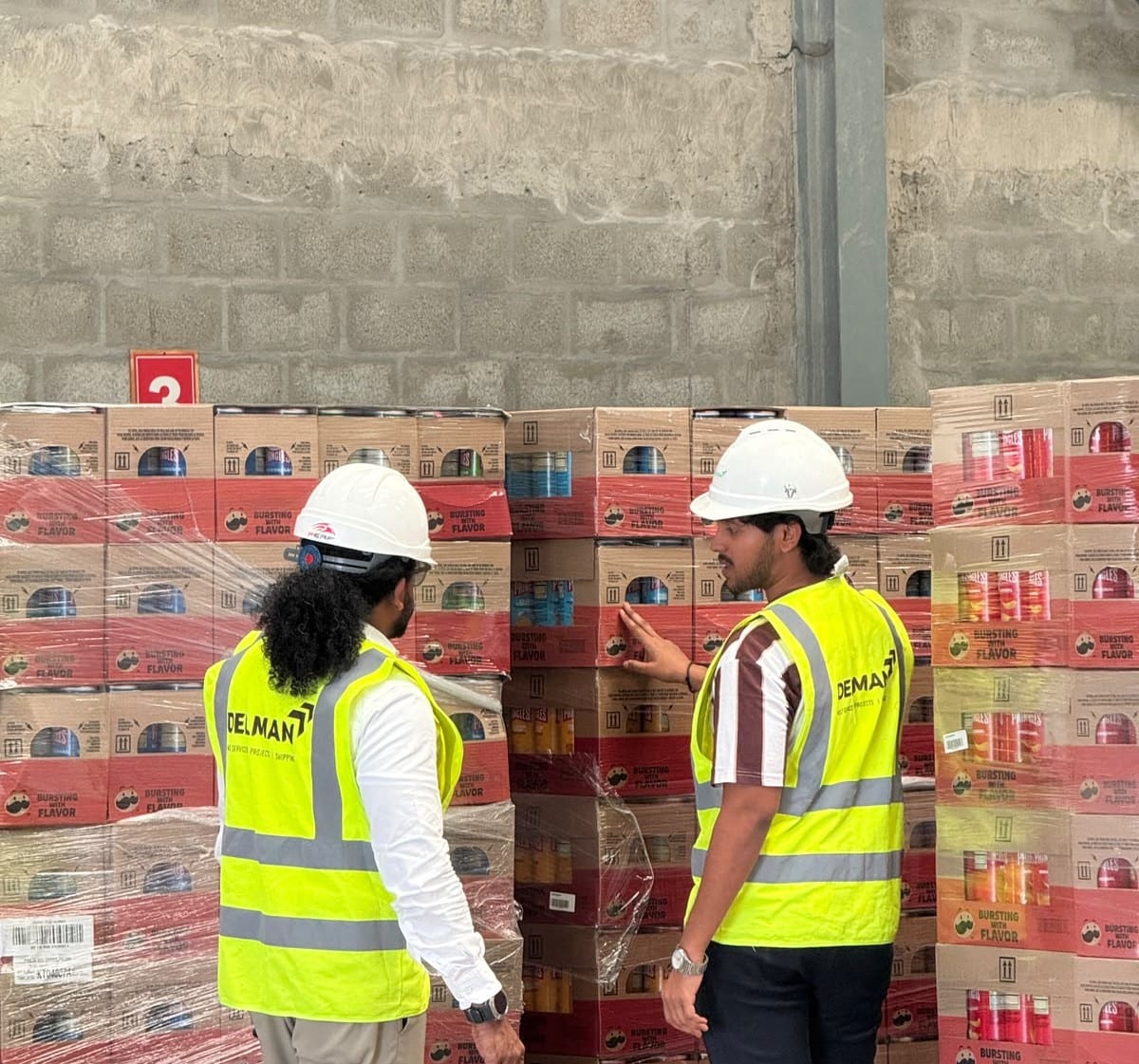
One of the most memorable parts of my internship was visiting Delman Shipping's warehouse in JAFZA. This visit allowed me to see how warehouse logistics works in real life. The warehouse was functioning in a very organised and orderly manner. The staff handled the cargo carefully and followed a clear process from receiving the goods to packing, securing, and preparing them for loading.
I observed how goods were packed using different types of pallets and cargo lashing. Pallets are important because they help organise, store, move, and load cargo safely. Cargo lashing is also important because it secures goods and prevents them from shifting during transportation. This is especially necessary when cargo is moved by truck, loaded into containers, or shipped by sea.
The warehouse visit helped me understand that packing is not a simple task. The method used depends on the size, weight, value, and nature of the goods. Heavy cargo may need stronger pallets and additional securing methods, while fragile cargo may need protective packaging. Dangerous goods may require specialised packaging and labels. Proper packing helps reduce the risk of damage and ensures that cargo reaches its destination safely.
I also learned how the company selects trucks based on the cargo requirements. Delman Shipping can use trucks ranging from approximately one-ton to five-ton capacity, depending on the weight and volume of the shipment. Choosing the right truck is important because it affects transport costs, loading efficiency, cargo safety, and delivery planning. Smaller cargo may require a smaller truck, while heavier or bulkier goods may need a larger vehicle.
Jebel Ali Port
After visiting the warehouse, we visited Jebel Ali Port. This was another important learning experience because I was able to observe how containers are handled and loaded onto vessels for sea freight. Jebel Ali Port is a major logistics hub for international trade, and seeing the port operations gave me a better understanding of maritime logistics.
At the port, I observed how containers are moved, positioned, and loaded onto vessels using large container-handling machinery. The process required careful coordination because containers need to be transported from storage areas or trucks to the correct vessel in an organised sequence. This showed me how important equipment, planning, and skilled workers are in sea freight operations.
The full cargo journey
Overall, my internship at Delman Shipping has helped me understand the complete journey of cargo. A shipment may begin with documentation and financial planning, move to warehouse packing and lashing, be loaded onto a truck, transported to Jebel Ali Port, placed into a container, and finally loaded onto a vessel for international delivery.
This experience has strengthened my interest in freight forwarding, supply chain management, logistics operations, and finance. It has shown me that successful cargo movement depends on much more than transportation. It requires accurate finance work, proper documentation, safe packing, warehouse efficiency, suitable trucks, port coordination, and strong teamwork.